Dark: A Masterpiece of Causality, Human Failure, and the Occasional Hole in Its Own Logic
Full-series spoilers, including the ending. Most time-travel stories use time as a device. A character discovers the past, changes something, and returns to a future that is either better or worse. The machinery exists to create suspense, undo tragedy, or give the protagonist another chance.

Full-series spoilers, including the ending.
Most time-travel stories use time as a device. A character discovers the past, changes something, and returns to a future that is either better or worse. The machinery exists to create suspense, undo tragedy, or give the protagonist another chance.
Dark takes a considerably more disturbing approach. What if the past cannot be changed because the very attempt to change it is what created it? What if the person trying to prevent a tragedy is also the person responsible for causing it? And what if the people you love, the choices you make, and even your own existence are entangled in a chain of events that has no identifiable beginning?
Created by Baran bo Odar and Jantje Friese, the German series begins with missing children in the small town of Winden and gradually transforms into a story about four families, several generations, two interconnected worlds, and an original reality buried beneath them all. Its ambition is extraordinary: to make time travel more than a collection of twists, turning it into the structural principle governing the entire story.
What makes Dark remarkable is not simply that its timeline is complicated. Plenty of fiction is complicated. Its achievement is that the complexity of the timeline becomes the substance of the drama. Its greatest weakness is that, by the end, the desire to preserve the machinery occasionally becomes more important than the rules that machinery was supposed to obey.
That tension is precisely what makes the series worth examining.
The genius: time travel that creates the problem instead of solving it
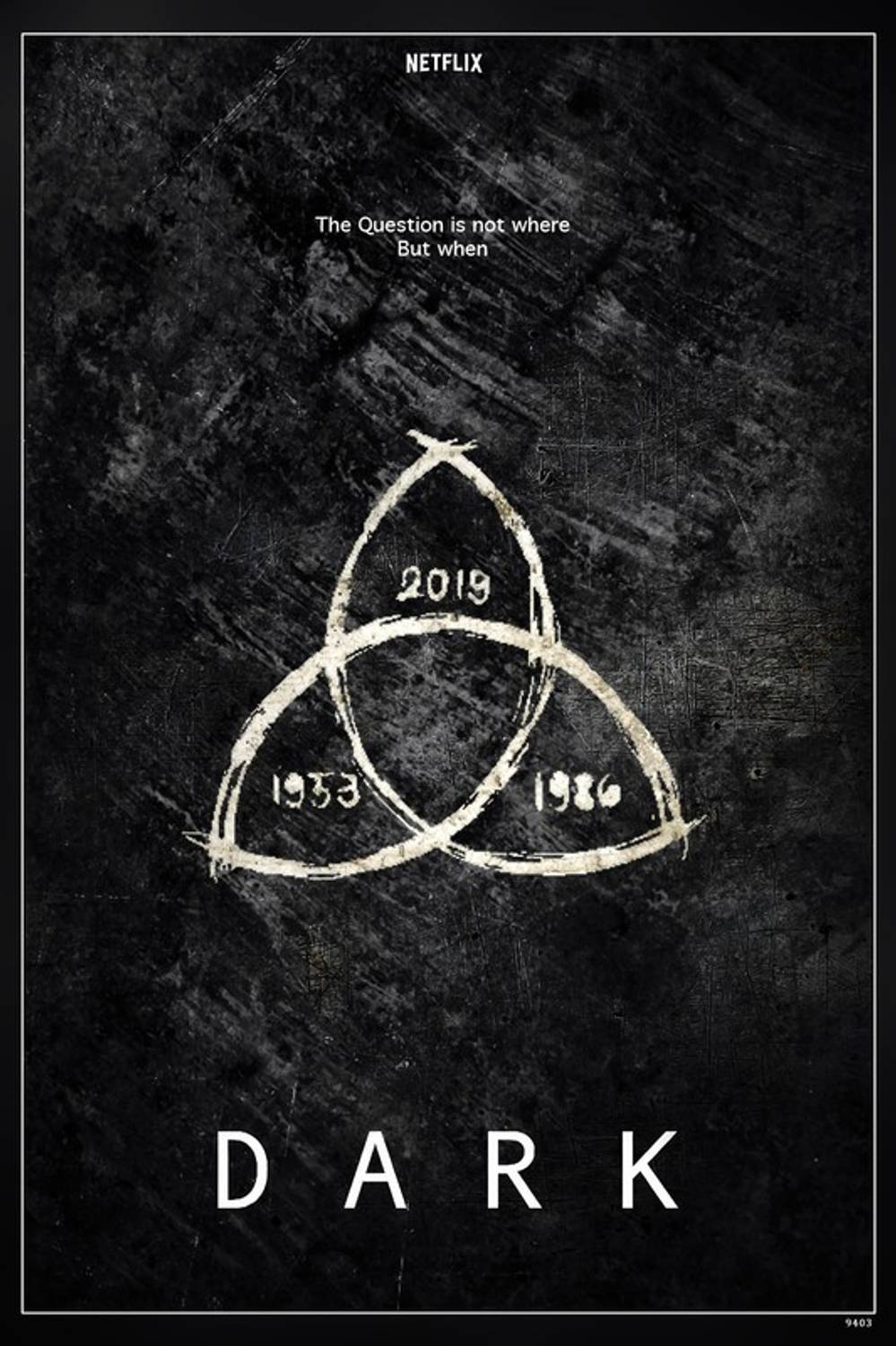
The most important idea in Dark is the causal loop.
In a conventional story, an event happens, and its consequences follow. In Dark, consequences can travel backward and become the causes of the events that produced them. An event is no longer simply a point on a timeline. It can be both the beginning and the result of itself.
Consider the stranger, the clockmaker H. G. Tannhaus, and the mysterious time-travel device. The stranger brings Tannhaus a device that he needs repaired, and Tannhaus uses his understanding of it to work on a machine of his own. Yet the older device is connected to the younger device in a way that makes the question of its original design almost impossible to answer. Knowledge travels backward through time, and the machine exists because information about the machine already exists.
Who invented the decisive design? Where did the information originally come from?
There is no conventional answer. The object belongs to a closed causal chain.
This is the bootstrap paradox, and Dark builds an entire narrative philosophy around it. Information, objects, relationships, and family lineages can become trapped in cycles in which each element depends on another that ultimately depends on it.
The genius lies in how the show makes this idea personal. A time machine is not merely a scientific curiosity. It is a physical manifestation of the story's central problem: people inherit circumstances they do not understand and then reproduce them while believing they are correcting them.
The family tree is where this becomes especially unsettling. The series does not use its tangled genealogy merely to surprise viewers with the identity of someone's parent. It makes family history part of the mechanism that sustains the time loop. Knowledge, parentage, desire, and identity become interdependent. Some people exist because of events involving their own descendants. Relationships that would ordinarily have a clear generational direction become circular.
This produces a particularly dark implication: in Winden, people do not simply inherit trauma; some of them are caught in the causal machinery that keeps generating it.
The town becomes a system that reproduces its own suffering.
That is a much more interesting use of time travel than sending a protagonist back to prevent a murder.
The show understands that a time loop must change the meaning of a scene
One of the hardest things about a complicated mystery is making revelations feel both surprising and inevitable.
A weak mystery conceals information and eventually reveals it. A strong mystery changes what the audience believes the information means.
Dark repeatedly achieves the latter.
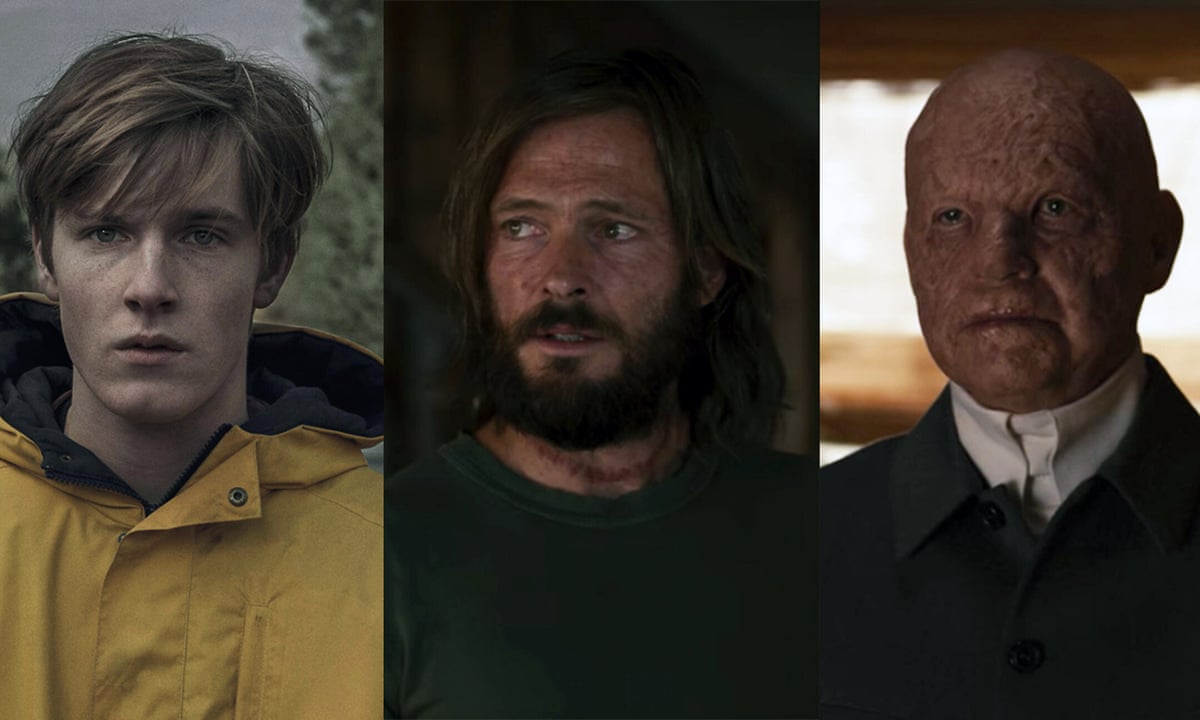
Mikkel's disappearance initially appears to be a mystery about a missing child. His presence in 1986 eventually transforms the show's understanding of the Nielsen and Kahnwald families. Jonas's personal search for answers becomes inseparable from the origin of his own identity. The older Jonas is not simply someone who knows more than the younger Jonas; he represents what that knowledge, combined with years of failure, can do to a person.
The past does not merely explain the present. The present changes the meaning of the past, and the future alters both.
The same principle applies to objects. A machine, a photograph, a letter, a scar, or a family record can acquire a second meaning when its history becomes clear. An object is no longer background detail. It is evidence that the timeline has been folded back on itself.
This demands a remarkable amount of narrative coordination. The writers must track not only when something happens, but who knows about it at a particular age, which version of an object exists at that point, what a character believes, and whether a later revelation contradicts an earlier scene.
The audience experiences the result as confusion followed by recognition. When the pieces fit, the pleasure is not simply that the answer was clever. It is that the answer was already hiding in the structure.
That is the difference between a twist and genuine narrative architecture.
Time becomes a philosophical problem
The philosophical core of Dark is often described as the conflict between free will and determinism. But the show is more interesting when understood through the distinction between choosing something and being able to produce a different outcome.
Jonas wants to prevent suffering. Ulrich wants to save his son. Claudia wants to outwit the system. Adam wants to destroy the knot, while Eva wants to preserve it. Their objectives differ, sometimes radically, but they share a dangerous assumption: that sufficiently profound knowledge of the system will allow them to master it.
The cruel joke is that their knowledge frequently becomes the instrument through which they maintain it.
Jonas learns that the future is horrific and attempts to prevent it. His attempts help create the future he has seen. Adam eventually becomes convinced that destroying the knot is the only way out, yet many of his actions preserve the chain of events that produces him. Eva understands that certain events must recur to preserve her world, and she manipulates younger versions of herself to maintain them.
These characters are not stupid. They are trapped in a more subtle problem: they mistake knowledge of the future for freedom from the future.
The show also suggests that emotional suffering can make people collaborators in their own imprisonment. A person who cannot accept loss may become willing to sacrifice almost anything to reverse it. A person who has endured enough pain may decide that causing pain is justified if it eventually produces a better outcome. A person who sees an endless cycle of suffering may convince themselves that the entire world must be destroyed.
Time travel gives these impulses extraordinary consequences, but the impulses themselves are recognizably human.
This is where the series' fatalism becomes more than a science-fiction gimmick. Its characters do not merely encounter the consequences of their choices. They repeatedly encounter the limits of their ability to understand those consequences.
There is, however, an important philosophical distinction that Dark sometimes blurs. Determinism does not automatically mean that choice is meaningless. If every event has causes, then a person's decision can still be one of those causes. The fact that a choice is causally determined does not necessarily mean the choice has no influence on what happens.
In the world of Dark, Jonas's decision to travel, Ulrich's decision to pursue Helge, and Claudia's decision to investigate all matter precisely because those decisions belong to the causal chain. They are not irrelevant actions occurring outside the timeline. They are part of what makes the timeline possible.
The tragedy is not necessarily that nobody chooses anything. It is that the characters cannot see the full consequences of their choices, and the system repeatedly turns their attempts at liberation into instruments of repetition.
That is a far more interesting idea than simply saying that fate cannot be changed.
The bad: when the machine starts writing the story
A show can be thematically coherent and still have weaknesses in its internal logic. Dark is so structurally ambitious that it invites an unusually strict examination of its rules. The more a story asks viewers to track causality, the more noticeable it becomes when causality appears to bend for dramatic convenience.
The first distinction worth making is that a causal paradox is not automatically a plot hole. If an object has no identifiable origin because it exists within a closed loop, that is a deliberate feature of the story's model of time. It might be physically speculative, but it is not internally inconsistent merely because it is strange.
An actual problem occurs when a story establishes a rule and then breaks it without an adequate explanation, or when a character's success depends on information, abilities, or circumstances that the established rules do not support.
Dark usually understands this distinction. Its more questionable moments arise when it expands its own rules to accommodate new revelations.
The introduction of the apocalypse loophole is the clearest example. During the moment when time briefly stands still, the ordinary chain of cause and effect can be disrupted sufficiently for different outcomes to emerge. This explains how versions of characters can take different paths and helps establish the branching realities central to the third season.
The idea is thematically elegant. If a deterministic system depends on an uninterrupted chain of causes, a moment in which that chain is disrupted creates a possible opening.
But dramatically, it is also a convenient solution. The series has spent considerable time convincing us that the knot is closed, that events reproduce themselves, and that attempts at intervention are already part of the design. Then a special condition appears that allows the right characters to escape the consequences that had previously seemed unavoidable.
The loophole is not inherently incoherent. A sufficiently precise rule can permit branching possibilities while preserving consistency within each branch. The problem is that the rule arrives late, after the audience has invested heavily in the apparent rigidity of the system. It risks feeling less like a consequence of the rules than an exception introduced because the plot requires one.
Season three compounds this problem by expanding the story from one tangled timeline into two closely related worlds and, finally, the origin world. The expansion makes the mythology richer, but also makes the rule system harder to keep perfectly legible. At a certain point, the audience is no longer merely tracking events. It is trying to infer the exact operating conditions of a fictional universe whose mechanisms are revealed selectively.
That is an exhausting burden to place on the viewer, especially when the story's emotional resolution depends on accepting those mechanisms.
There is a related problem with Adam. He spends years studying the knot and acts as though he understands its architecture well enough to destroy it. Yet the final explanation reveals that his understanding is radically incomplete. His failure can be read as a meaningful expression of his hubris: he confuses experience and suffering with comprehensive knowledge. But it also creates a practical question. How can someone who has spent so long investigating the system fail to recognize the possibility that a deeper origin exists?
The answer is that Adam's knowledge is not neutral. It is filtered through his desire to end the suffering that defines him. He is an investigator whose conclusion has been determined in advance by his emotional need.
This makes sense as character psychology. It is less satisfying if one expects Adam to function as a rigorous scientist of his own universe.
Claudia's final insight creates a similar tension. Her discovery is dramatically effective because she has been pursuing a path distinct from Adam's and Eva's. She studies the worlds rather than accepting either one's explanation of them. Yet the precision of her final understanding can feel almost impossibly convenient. After years of uncertainty, she identifies the crucial distinction that the others missed and explains the route out of the knot.
This is not necessarily a literal plot hole. The series has established Claudia as a persistent, analytical investigator. But her solution depends on a level of insight the audience cannot independently reconstruct with the same confidence. The story tells us she has found the decisive answer more clearly than it demonstrates every step of how she found it.
That matters because Dark is at its best when viewers can look back and recognize the logic that produced a revelation. It is weaker when an explanation arrives with the authority of a solution but without quite enough evidence to make the solution feel inevitable.
The same tension appears in the characters' behavior. Again and again, people with important information fail to communicate it clearly, or choose elaborate manipulation over a seemingly simpler explanation. Sometimes this is psychologically credible: fear, distrust, obsession, and the knowledge that previous attempts at intervention have failed can make direct communication feel pointless. Sometimes it is an essential part of preserving the loop. But sometimes it also feels like the story needs a character to remain ignorant for another episode.
This is the danger of making every character a participant in a vast causal puzzle. Their decisions must serve two functions: they must be believable expressions of personality, and they must preserve a complicated structure. When those demands conflict, plot mechanics can take priority over ordinary human behavior.
The series also occasionally turns people into mechanisms. Their suffering is potent, but their individual lives can become secondary to the roles they play in sustaining the knot. A character may matter less as a fully explored person than as the missing link in a genealogy, a necessary death, or a piece of information that must be passed backward.
That gives the show its remarkable density, but it can reduce emotional freedom. You start noticing that a character exists to make a diagram work.
None of these weaknesses cancels the achievement. They reveal the price of the achievement. The more intricate the system, the more the writers must balance emotional plausibility against structural necessity. Dark manages that balance extraordinarily well for much of its run, but not perfectly.
The ending: a beautiful escape, or an escape from the rules?

The final revelation changes the scale of the entire story.
Jonas's world and Martha's world are not simply two realities created by a cosmic accident. They are consequences of an experiment in the origin world. Tannhaus, devastated by the loss of his family in a car accident, attempts to create a machine that can undo that loss. Instead, his experiment generates the two worlds that contain the knot.
The origin of the story is therefore not Adam, Eva, Jonas, or Martha. It is grief.
Tannhaus wants to reverse a death. His attempt creates realities whose inhabitants will spend generations trying to reverse their own suffering. What begins as one man's refusal to accept loss becomes an immense structure in which countless lives are tied to the same fundamental failure of acceptance.
The ending is powerful because Jonas and Martha do not defeat the knot by mastering its internal logic. They leave the worlds in which that logic governs them and prevent the event that caused those worlds to exist. They travel to the origin world and stop Tannhaus's family from dying in the accident, which means he has no reason to conduct the experiment that creates the knot.
The consequence is severe: Jonas's world and Martha's world disappear, along with the people whose existence depended on them.
The solution is not a conventional happy ending. The characters do not survive and then receive a restored future. They prevent their own reality from coming into being. Their victory requires the erasure of the lives, relationships, and suffering that made them who they were.
Philosophically, this is where Dark becomes most interesting. The characters spend three seasons trying to escape their fate while assuming that freedom means preserving themselves and changing their circumstances. The final act proposes something harsher: perhaps the only way to end a structure built from grief is to let go of the reality grief created.
There is a genuine poetic symmetry here. The story begins with missing children, hidden family histories, and people searching for the lost. It ends by preventing the original loss that set the larger catastrophe in motion. The narrative returns to an event that precedes almost everything we have witnessed and changes its meaning.
But the ending also exposes the show’s largest logical compromise.
If the two worlds and their travelers exist because of the experiment, how can Jonas and Martha travel back to prevent the event that made their travel possible? What exactly allows the origin world to be reached from realities that are erased when their causal origin is removed? The finale gives us an emotionally legible answer, but not a fully rigorous physical one.
The show's own mechanism has to permit the intervention long enough for the intervention to erase that mechanism. One can interpret this as a special causal structure, or as a self-consistent solution to the paradox, but the precise mechanics are not as transparent as the earlier loops.
This is where the series' science-fiction logic gives way to something closer to myth. The ending behaves less like a clockwork proof and more like a tragedy in which the characters must sacrifice their existence to resolve the original wound.
That is not necessarily a flaw. Fiction can choose thematic truth over literal physical consistency. But it is a choice, and Dark benefits from being judged honestly rather than defended as an infallible machine.
The ending works emotionally because it resolves the story's central idea. It works structurally because it returns to the origin. It is less airtight if treated as a strictly defined time-travel system in which every condition must be derivable from previously established rules.
The distinction matters. A story can be emotionally inevitable without being mechanically perfect. Dark achieves the former more completely than the latter.
The effort behind the story and why it still matters
What makes Dark such an impressive piece of writing is the degree of coordination it asks of itself. It must maintain a coherent relationship between multiple time periods, different ages of the same characters, family histories that cross generations, objects that move through time, and revelations that change the meaning of earlier events.
Its visual language reinforces that architecture. Locations recur across different eras. Characters occupy similar compositions at different ages. Objects become connective tissue between otherwise separated scenes. Music, repeated images, and mirrored situations make the world feel governed by patterns before the audience fully understands those patterns.
The production must also sell continuity across time. The same person needs to remain recognizable as a child, adult, and older adult, while still embodying the consequences of a life lived. Makeup, casting, performance, costume, set design, and the precise staging of recurring locations all contribute to the illusion that we are watching one coherent reality folding over itself.
That is more demanding than simply inventing a complicated timeline. Complexity on paper is cheap. Making complexity legible on screen is not.
A mystery can always introduce another secret. The harder task is ensuring that the new secret makes earlier scenes more meaningful rather than rendering them irrelevant. Dark often succeeds because revelations tend to recontextualize what has already happened instead of replacing it with an unrelated explanation.
Its characters may be manipulated by the story's mechanics, but their emotional motivations remain recognizable: grief, fear, love, resentment, guilt, the desire to save a child, the refusal to accept the death of someone important. These are simple human impulses placed inside an extraordinarily elaborate structure.
That contrast is the series' real achievement. The machinery is enormous, but the motives are intimate.
And the flaws are instructive. The apocalypse loophole, the expansion into multiple worlds, and the sometimes overly convenient arrival of decisive knowledge show how easily a complicated narrative can begin to protect its own architecture at the expense of its dramatic rules. The more a story depends on its audience believing that everything fits, the more carefully it must distinguish between a planned paradox and a convenient exception.
Yet few series make that distinction matter as much as Dark does. Its weaknesses are visible precisely because its ambitions are so high.
The series is not flawless, and it does not need to be. Its achievement is that it makes time travel feel like a question about human life rather than a trick of science fiction. It asks whether we can escape the consequences of our own decisions, whether understanding a system gives us power over it, and whether love can become destructive when it refuses to accept loss.
Its most unsettling proposition is that people can become the agents of the very suffering they want to prevent—not because they are evil, but because they cannot imagine a future in which their grief no longer determines what they do.
In Winden, the past is not behind anyone. It is something people continue to produce.
And perhaps that is why Dark remains so compelling even where its mechanics falter. Its timeline can be debated, its loopholes examined, and its ending challenged. But its central tragedy is much harder to dismiss: the desire to undo pain can become the force that ensures pain is repeated.
The brilliance of Dark is not that it builds a perfect machine. It is that it builds a machine sophisticated enough to expose the human weakness that keeps it running.